Digital accessibility? It benefits you. The only question is how much.
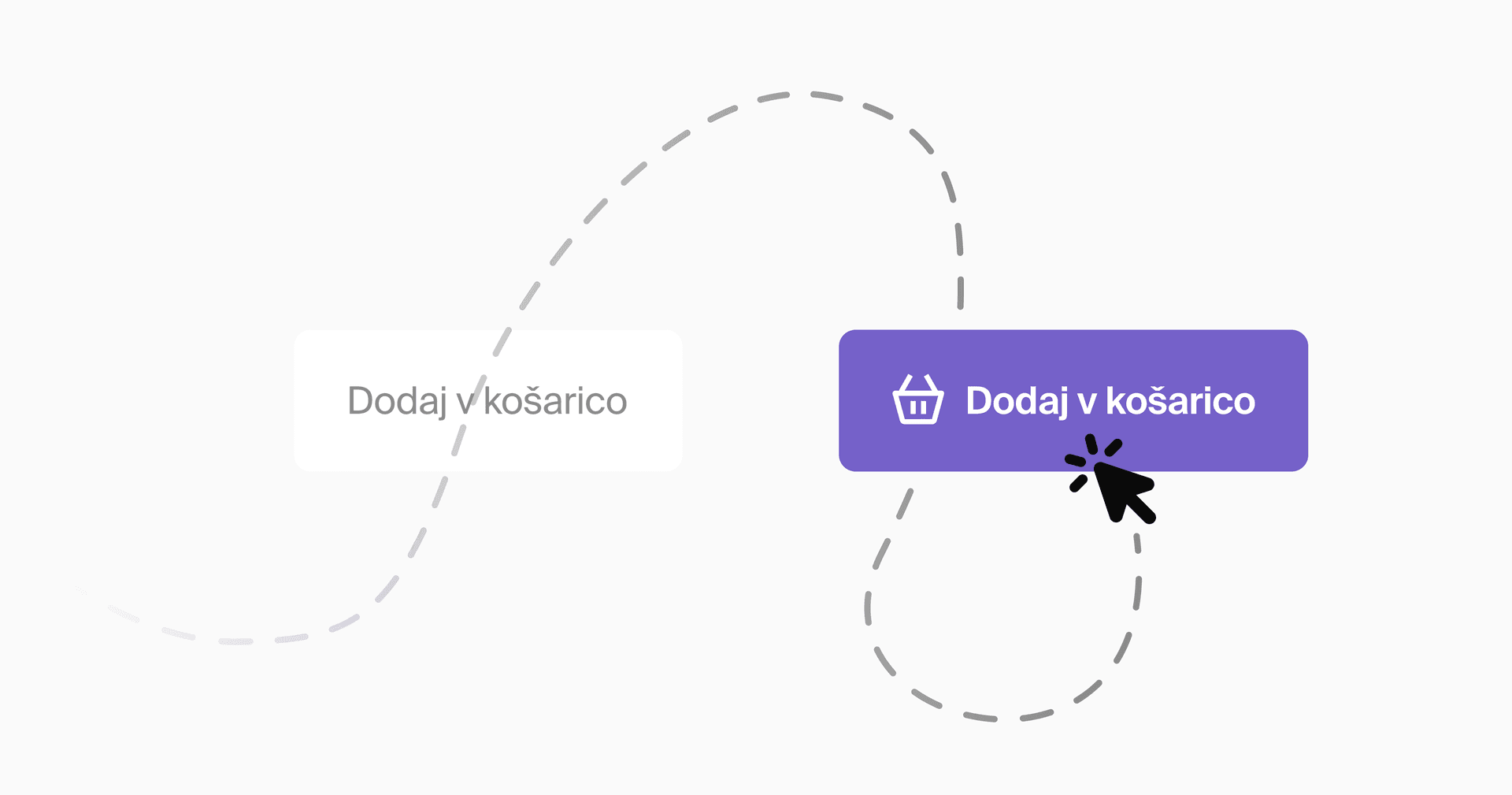
Accessibility does not only benefit people with functional limitations. It benefits everyone, and the bottom line as a result.
Have you ever looked for a button on a page and not found it straight away? Has a form skipped fields when you pressed Tab? Have you pressed Enter and nothing happened?
That is accessibility.
We often associate it only with people with disabilities, but it benefits everyone: it improves the user experience for every single visitor.
There are 1.3 billion people in the world with a permanent functional impairment. Even more are impaired temporarily, through injury or circumstance. That makes accessibility a necessity rather than an extra. It makes digital solutions faster, simpler and less frustrating for everyone.
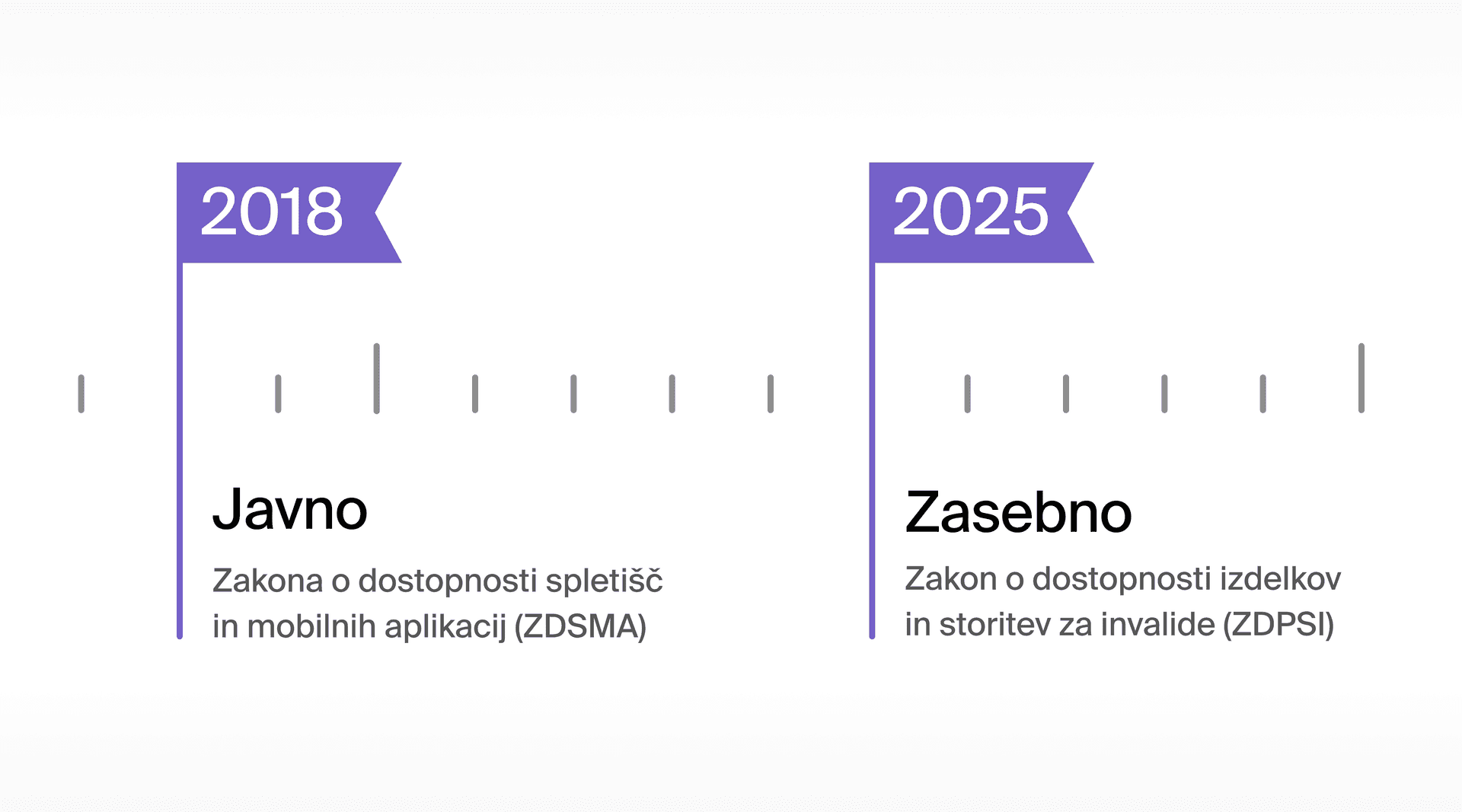
In Slovenia, digital accessibility legislation has applied to public institutions since 2018 and, from 2025, to the private sector as well.
Who has to comply: the legislation
The Accessibility of Products and Services for Persons with Disabilities Act (ZDPSI), which transposes the European Accessibility Act into Slovenian law, applies from 28 June 2025. What is new is that the requirements now extend to the private sector.
Public-sector websites and apps have already been required to be accessible under the 2018 act (ZDSMA). Both laws are based on the WCAG (Web Content Accessibility Guidelines). Version 2.2 is recommended, as it gives better long-term compliance.
Under the new law, companies that offer certain digital products or services must be accessible too.
Does the law apply to you?
It applies to you too if you offer a service or product in one of the following categories:
• Consumer computers and operating systems
• Self-service terminals (e.g. ATMs, ticket machines, information terminals)
• Interactive equipment for electronic communications services and audiovisual services
• E-readers
• Electronic communications services
• Access to audiovisual media services
• Air, bus and waterborne passenger transport
• Consumer banking services
• E-books
• E-commerce services
For services, microenterprises are exempt.
Whether a particular company is actually exempt depends on its specific legal circumstances, so we recommend consulting a legal expert. This article is not legal advice.
Let's raise the bar on accessibility
Although the legal requirements have been in place for some time, the results they have produced are not especially encouraging. In many cases the solutions are only partial and of low quality. There are several reasons for this, but the main one is that accessibility is undervalued, because people misjudge how many users actually benefit when the rules are followed.
Accessibility is not a layer of clothing you put on when you get cold. It is part of the fabric of every garment.
That is why solutions that add accessibility only as an extra layer, such as accessibility plugins, are often ineffective and do not fix the underlying problems. In many cases they even make the product harder to use, especially for users with the most severe impairments.
If we build products properly and systematically, without taking too many shortcuts, most of the requirements are covered from the outset. Only a small share will need attention later.
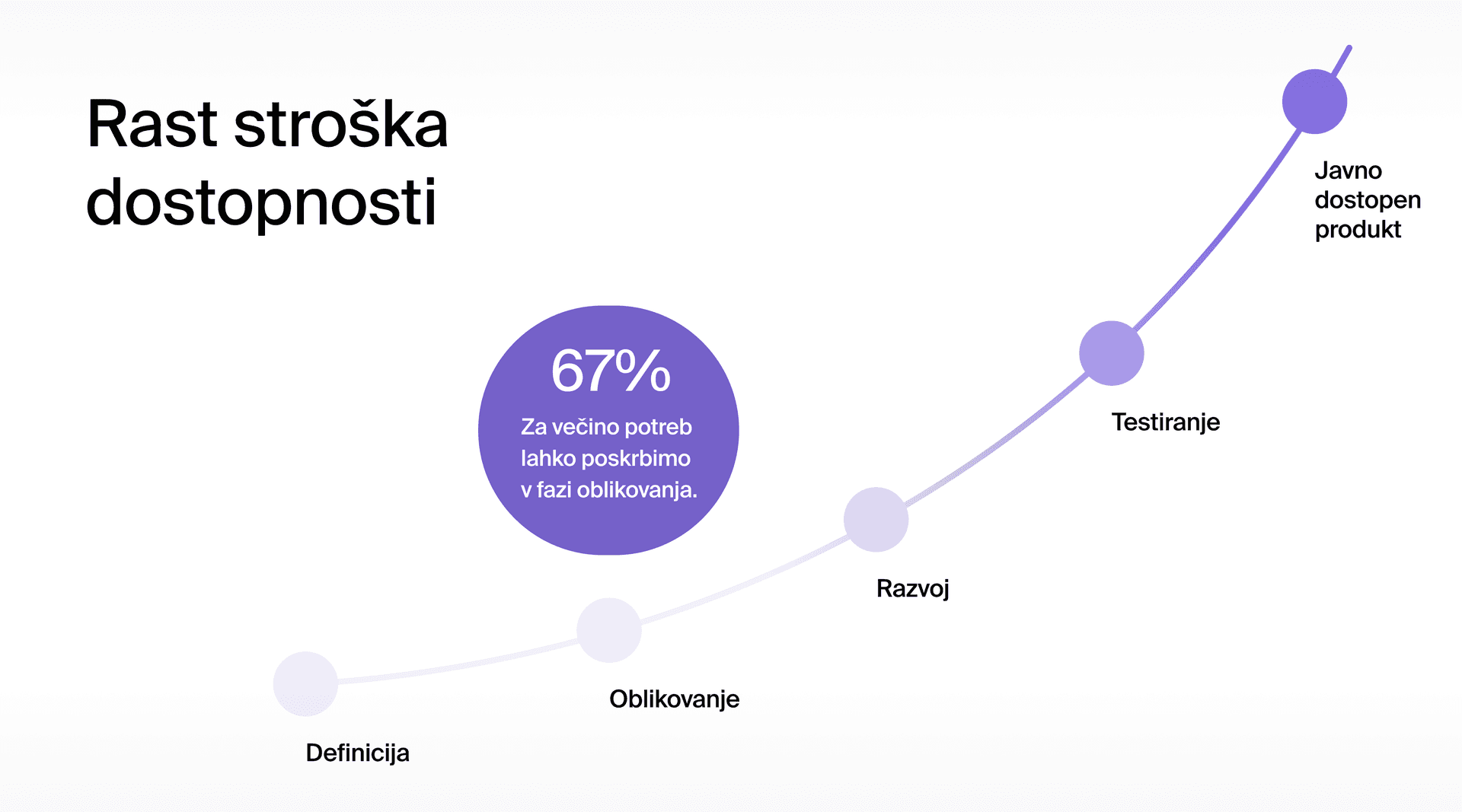
The chart shows the time needed to bring a product to an adequate level of accessibility at different points in its life cycle. The earlier accessibility work starts in the product development process, the easier and cheaper it is to reach the level you want.
The right start. A better result. Lower costs.
Accounting for accessibility at the start of a project is far cheaper than fixing it afterwards. If it is built into planning, design and development, only minor adjustments are needed for legal compliance.
The result is a better solution that benefits all users and improves business results. The scope of the upgrades should be matched to your legal obligations and the goals of the project.
It is never too late for the right approach
We cannot expect every existing digital product to be rebuilt from scratch because the law has changed. In many cases that would not be financially justified. The most sensible first step is then an assessment of the existing solution. The assessment identifies the problems, rates how critical they are and proposes improvements. That lets you approach the changes strategically and as a whole, and draw up a plan for the route to a more accessible solution.
Nothing done well happens overnight. A good solution needs a good plan.
To repeat: accessibility benefits every single user. And the provider.
Let's drop the idea that accessibility only benefits a small share of users. A meaningful page title, a clearly visible button and text that is easy to read and understand (to name just a few examples) improve the experience for every user. In many cases they even speed up the path to purchase and strengthen trust in the brand.
So let's give accessibility more attention. In the medium and long term, its effect will be visible and measurable.
Want to make your website or app more accessible?
We build accessibility into every stage of design and development, from concept to implementation. We also offer assessments of existing solutions, which identify the problems, rate how critical they are and propose targeted improvements.
We hold the IAAP CPACC (Certified Professional in Accessibility Core Competencies) certification, issued by the International Association of Accessibility Professionals (IAAP).
Let's create a better user experience for everyone. Contact us and we will arrange a free consultation.
EAA compliance
Accessibility Audit
An audit against WCAG 2.1/2.2 AA for compliance with the European Accessibility Act. In 2–3 weeks you get a list of barriers, annotated screenshots and instructions for developers.
From 2.500 €
We write about it. We also build it.
Let's talk about your project
A 30-minute call to understand what you're building and how cvan we help. No brief required.
Prefer email?
info@cnj.si