What is a digital ecosystem: the key role it plays for businesses
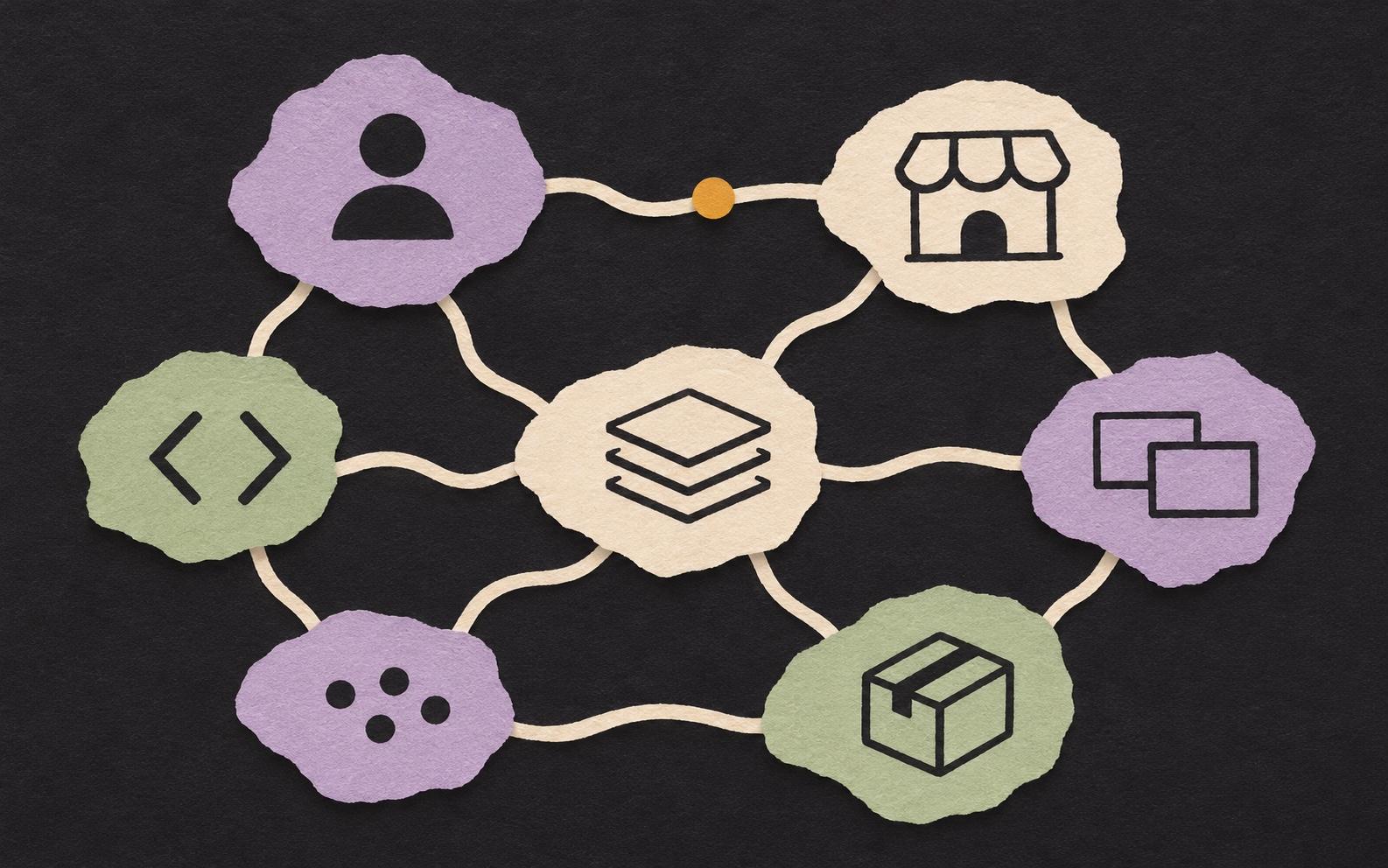
Digital change now sets the pace of business, so understanding what a digital ecosystem means is essential for digital strategy leads and IT directors. Modern digital ecosystems are more than a collection of tools. They are becoming complex systems that connect autonomous entities without rigid hierarchies. This openness, modularity and dynamism is the main difference from established ways of doing business, and it opens up opportunities for more effective collaboration and innovation.
Table of contents
Definition of a digital ecosystem and core concepts
Types of digital ecosystem and how they connect
Key characteristics and how an ecosystem works
Practical benefits for businesses and use cases
The most common mistakes when optimising an ecosystem
Key points
Point | Details |
|---|---|
Understanding the digital ecosystem | A digital ecosystem lets different players work together and create shared value that is greater than what they would create individually. |
The importance of openness | Moving from a closed, proprietary mindset to an open structure is the key shift for success in a digital ecosystem. |
Adaptability as an advantage | An effective digital ecosystem adapts quickly to market changes, which means faster innovation and a faster response to user needs. |
Key implementation mistakes | Underestimating complexity and lacking a clear strategy are the most common mistakes, and they can cause ecosystem optimisation to fail. |
Definition of a digital ecosystem and core concepts
A digital ecosystem is more than a piece of software or a platform your company buys and plugs in. It is a complex system built on digital technologies that lets different autonomous entities work together without rigid hierarchical structures.
In this ecosystem your partners, suppliers, competitors, startups and users meet on shared digital platforms. Everyone contributes their knowledge and data, and together you create value far greater than what each of you could achieve alone.
Think of the difference between a traditional supply chain and a digital ecosystem. The old approach runs on rigid rules: you order, the supplier delivers, done. A digital ecosystem is a living network that adapts on its own, expands and learns from data in real time.
Core properties of a digital ecosystem
To understand where your company fits into this picture, you need to know four key characteristics:
Self-organisation: The system is not run from the top down but evolves according to the needs of its members
Scalability: New players can join without breaking existing connections
Sustainability: The ecosystem survives because it has built-in mechanisms for adaptation and resilience
Openness: Ideas, data and interfaces are shared through clear, accessible channels
A digital ecosystem is a distributed, adaptive, open socio-technical system that works like a natural ecosystem: every part influences the others and learns from them.
This openness is often the opposite of what your company has done before. Moving from a closed, proprietary mindset to an open one is the biggest mental shift you have to make.
The key difference from traditional business models
Traditional companies are vertically integrated. You have your departments, your suppliers, your customers, and clear boundaries between them. Everything runs through processes planned in advance.
A digital ecosystem changes that. Your efficient, flexible systems work with external partners just as they do with your own internal systems. Digital innovation often happens when ideas from different sectors and industries meet for the first time and create something entirely new.
Its characteristics are:
Dynamic connections between players instead of rigid contracts
Real-time flow of data and feedback
Building value together instead of reselling
Learning and adapting based on user behaviour
Your job as a leader is to understand what this means for your organisation and how to prepare for this transformation.
Here is a table comparing traditional business models and digital ecosystems:
Characteristic | Traditional model | Digital ecosystem |
|---|---|---|
Structure of relationships | Rigid, linear chain | Dynamic network of partners |
Flow of information | Slow, controlled | Continuous, in real time |
Value | Created separately | Co-created |
Adaptability | Limited and slow | High and flexible |
Practical tip: Review which of your current processes rest on rigid contracts and partnerships. These are the points where a digital ecosystem could bring the most value in future.
Types of digital ecosystem and how they connect
Not all digital ecosystems are the same. Some are as open as a public park, others as closed as a security system, and some sit somewhere in between. The type you choose for your company has huge consequences for how you grow and who you work with.
Understanding the different architectural models will help you work out which approach best fits your business goals and philosophy.
The three main types of ecosystem
Most digital ecosystems fall into three basic categories:
Open ecosystems: External developers and partners can contribute and build applications without restrictions
Closed ecosystems: The organiser keeps strict control over content, data and access
Hybrid ecosystems: A combination of proprietary services with openness to selected partners
Open ecosystems are like a bazaar: anyone can set up a stall and sell their goods. Closed ecosystems are more like an exclusive club with vetted members. Hybrid ones try to get the best of both worlds.
How ecosystems connect with each other
Ecosystems do not develop in isolation. They connect through digital platforms and interfaces that let data and information flow freely between participants.

This means your closed ecosystem does not stay cut off from the world. Through standard interfaces it can connect to other systems, companies and even open ecosystems. This connectivity is essential for an optimal customer experience and for the ability to scale value.
There are three types of connection:
Data connections: Transfer of structured data between systems
Process connections: Automation of business processes across ecosystems
Functional connections: Sharing of services and capabilities between players
Different ecosystems connect with each other through digital platforms and APIs, which enables the integration of services and the co-creation of value across industry boundaries.
Choosing the right type for your company
Whether you choose an open or a closed model depends on your industry and strategy. Technology companies often build open ecosystems because they want innovation from external developers.
Financial institutions are more cautious and often take a more closed approach, since data security is their priority. Industry, meanwhile, is slowly moving towards hybrid models because they offer flexibility without loss of control.
Practical tip: Analyse what your competitors are doing, whether they are building open or closed ecosystems, and what that means for their pace of growth and innovation.
Key characteristics and how an ecosystem works
For your company to operate successfully in a digital ecosystem, you need to understand what actually drives it. Technologies and platforms are only part of it. What drives it is the blueprint for how everything connects and functions together.
The complex environment of a digital ecosystem rests on a few key principles that allow hundreds or thousands of different entities to move together in the same direction, even though nobody is handing down answers from the top.
Five key characteristics
Every digital ecosystem that really works has the following properties:
No hierarchy: No single leader decides for everyone, and decision-making is distributed
Self-organisation: The system follows the path of least resistance, like water
Scalability: New members can join without choking the whole system
Data openness: Information is shared through standardised interfaces
A partnership approach: Competitors are sometimes partners too, when it comes to common standards
You are probably used to direct control and hierarchical lines, and a digital ecosystem is the opposite. This is a change in thinking, not only in technology.

How an ecosystem actually moves
Within a modular architecture, each participant moves independently but stays connected to the others. Picture a flock of birds: nobody steers the flock, yet all the birds move as one.
The way an ecosystem works delivers three key results:
Fast adaptation: When market conditions change, the ecosystem adapts in days, not months
Innovation: New ideas come from anywhere in the network, not only from the top
Shared value: All participants benefit from shared success
This works because connectivity and interoperability are built into the foundations. Your systems have to talk to their systems without complicated bridges.
A digital ecosystem makes it possible to adapt quickly to market changes by promoting connectivity and interoperability between all participants, built on a modular architecture.
Data flow is the heart of it
An ecosystem lives on data that flows freely between participants. Data is a shared resource that everyone uses and improves, not private property.
This means you have to open your systems to others and be comfortable with others accessing your data. It sounds unusual, but without it you will never reach this level of integration.
Practical tip: Start by mapping the data flows in your organisation: which data could you share with external partners who would bring you value in return.
Practical benefits for businesses and use cases
Theory is nice, but what does this actually mean for your bottom line? Far from an academic concept, digital ecosystems are a real, measurable source of growth your company can tap today.
Real-time information exchange and connections between different industries let you adapt, innovate and grow faster than you can imagine.
Three concrete benefits
Most companies that operate successfully in digital ecosystems see three main changes:
Lower costs: Automation and resource sharing cut overheads by 20–40%
Faster product launches: The time from idea to market is cut by 50 to 70%
Better adaptability: Response time to change drops from months to days
This is not theory. Companies that have taken these steps see results in real time.
The table below summarises the key benefits of a digital ecosystem for a business:
Benefit | Description of effect | Expected improvement |
|---|---|---|
Lower costs | Shared resources and automation | Up to 40% lower costs |
Faster development | Fast exchange of information | Market reached up to 70% faster |
Greater flexibility | Fast adaptation to change | Response in days, not months |
Examples from practice
Effective partnerships in a digital ecosystem transform the way organisations communicate and work together.
In manufacturing, digital ecosystems are used to connect suppliers, manufacturers and distributors into a single system. When a supplier has a problem, the whole ecosystem knows immediately and adapts. Overall, this cuts delivery time by three months.
In retail, ecosystems are used to analyse customer behaviour, forecast demand and adjust stock in real time. The result is less unused inventory and more sales per square metre.
In technology, ecosystems are used to develop new applications and services quickly. External developers build on your platform, and you gain new capabilities without major investment.
Digital ecosystems allow companies to cut costs, bring new products to market faster and increase operational efficiency through connectivity and intelligent automation.
What is actually possible
Your real-world scenario: your company faces growing competition. Technology is changing fast. Suppliers are inflexible. Innovation is slow.
A digital ecosystem fixes that. You network with partners, share data, automate processes. Suddenly you are fast, adaptable and cheaper than the competition.
Practical tip: Identify the three biggest pain points in your business, whether cost, time or quality, and explore how a digital ecosystem could solve them.
The most common mistakes when optimising an ecosystem
Not every organisation that tries to join a digital ecosystem gets it right. In fact, most companies make at least one serious mistake that holds them back or even sinks the project.
Knowing what can go wrong saves you weeks, months and millions of euros. A poor ecosystem governance strategy is the number one reason transformation efforts fail.
The five biggest pitfalls
Watch out for these mistakes when planning your ecosystem:
Underestimating complexity: You assume integration is easy, and it isn't
No clear metrics: You don't know what “success” means for your ecosystem
Inadequate security: Being open must not mean being unsafe
Poor communication: Stakeholders don't know what is going on
Ignoring sustainability: Build it for tomorrow, not only for today
Most of these mistakes come from rushing. Leaders want results immediately, so they skip critical steps.
Mistake 1: Insufficient stakeholder involvement
Your IT department is building the ecosystem, but you have not involved sales, marketing or logistics. The result is a system that works technically, but nobody uses it properly.
Insufficient coordination between departments leaves systems incompatible, security weak and efficiency falling.
Mistake 2: Ignoring interoperability and standards
Your application works only with its own systems, not with others. That is like having a phone that can only call numbers on one network: useless.
A digital ecosystem requires different systems to talk to each other through standard interfaces. Neglect this and you are left with rigid, more expensive solutions.
Mistake 3: An overcomplicated approach
Many companies build huge, ambitious ecosystems with 50 modules and 200 integrations. The result is chaos.
It is better to start small. Three or four key connections. One or two main integration points. Fast learning and iteration. Growth in phases.
The mistake is to start with too much complexity, without a clear governance strategy and without proper frameworks for communication between all participants.
Mistake 4: Poor data protection
When you open up your data, you assume everyone means well. They don't. Security is the foundation, not an add-on.
Think through the scenarios: what happens if someone breaks into your platform? Do they have access rights? Was the data encrypted? Is there an audit trail?
Practical tip: Before you start any project, write down clear answers to three questions: what are our goals, what are our mistakes, and how can we prevent them in this project.
Ready for a breakthrough in your company's digital ecosystem
Have you run into challenges such as the complexity of connecting partners, a lack of interoperability between systems or slow adaptation to the market? This article makes it clear that the new reality of business lies in digital ecosystems, where self-organisation and data openness are the key to success. If you are struggling with outdated, rigid business models, now is the time to change your mindset and introduce smart digital solutions that enable fast learning, scalability and collaboration across your whole partner network.
Your digital transformation starts with a clear digital strategy plan and an optimised user experience. At https://cnj.si, as an experienced digital consultancy and development partner, we help you define the right steps before development begins. We combine expertise in strategic consulting, UX design and AI-informed systems to reduce complexity and make you more competitive in the market. Don't put it off: find out how your business can become part of a dynamic, sustainable digital ecosystem. Visit https://cnj.si and take the first step towards a more efficient, more flexible future today.
Frequently asked questions
What is a digital ecosystem?
A digital ecosystem is a complex system that brings together different autonomous entities, such as companies, partners and users, on shared digital platforms, enabling collaboration and information exchange without rigid hierarchical structures.
What are the key characteristics of a digital ecosystem?
The key characteristics of a digital ecosystem are self-organisation, scalability, sustainability and openness. This means the system evolves according to the needs of its members and adapts quickly to change.
How do digital ecosystems differ from traditional business models?
Digital ecosystems enable dynamic connections between players, real-time data flow and shared value creation, whereas traditional models rely on rigid processes and separate departments.
What benefits does a digital ecosystem bring to companies?
Companies that operate successfully in digital ecosystems can benefit from lower costs, faster time to market for products and better adaptability to changes in their environment.
Recommended
We write about it. We also build it.
Let's talk about your project
A 30-minute call to understand what you're building and how cvan we help. No brief required.
Prefer email?
info@cnj.si